
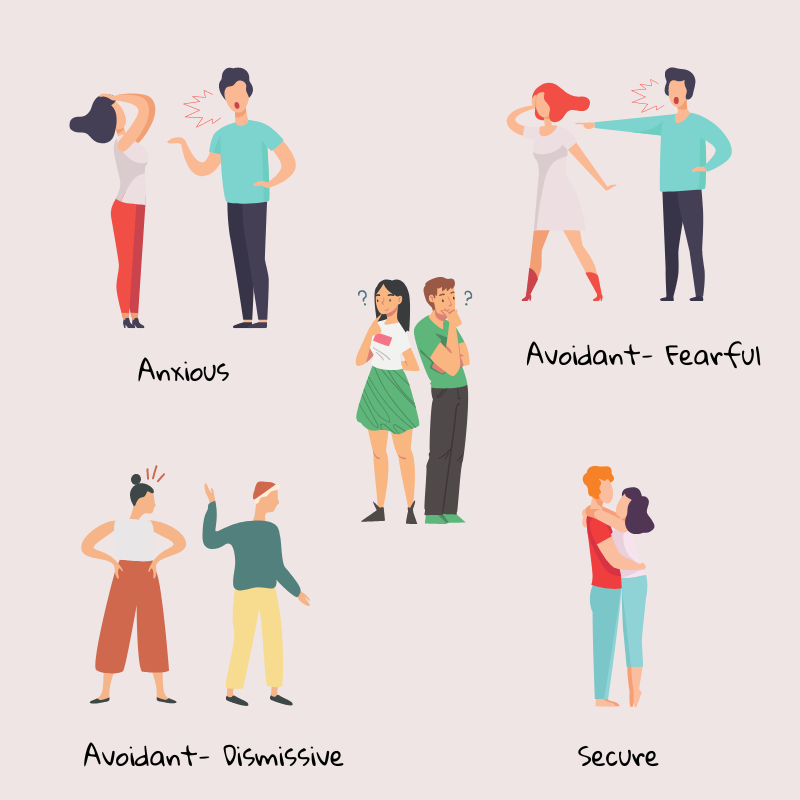
Your attachment style is shaped by your relationship with your parents (or other caregivers) during childhood. Your earliest relationships set the tone for how you will build your own romantic relationships, friend relationships, and even work relationships.
By better understanding your own attachment style, you can better understand yourself and how you relate to the most important people in your life. Attachment styles generally fall into two categories: secure and insecure. While a secure attachment style fosters healthy, trusting relationships, people with insecure attachment styles may struggle with trust, vulnerability, and communication in relationships.
What does the phrase “attachment style” mean?
Attachment styles refer to patterns of behavior and thought that are developed in early childhood and affect how individuals form and maintain relationships throughout their lives.
Secure and insecure attachment styles
Infants are dependent on caregivers for physical needs (such as food, shelter, and clothing) and emotional needs (affection, stimulation, and comfort). When the parent or other primary caregiver meets these needs consistently, the infant usually develops a secure attachment style that supports healthy adult bonds. When the needs are not met, however, the child may develop an insecure attachment style.
Anxious attachment style
People with an anxious-preoccupied attachment style tend to be overly dependent on their partner for validation and may feel insecure or anxious when their partner is not available. They often seek constant reassurance and may become clingy or jealous in their relationships.
Avoidant-fearful attachment style
People with a fearful-avoidant attachment style may have a strong desire for intimacy and connection but may also feel afraid of getting too close or being vulnerable with their partner. They may experience conflicting emotions and struggle with trust in their relationships.
Avoidant-dismissive attachment style
People with an avoidant-dismissive attachment style tend to value independence and self-sufficiency over intimacy and connection. They may come across as emotionally distant or detached in their relationships and may struggle to express their emotions or needs to their partner.
Secure attachment style
People with a secure attachment style tend to feel comfortable with intimacy and are able to balance their need for independence with their need for connection. They communicate openly and honestly with their partner and are generally trusting and supportive in their relationships.
Looking for help?
If you think that your relationship difficulties can be traced back to your Attachment Style, reach out to a therapist who understands attachment theory for professional help.